
"Petrodollar" Does Not Exist
The myth that persists since the 1970s

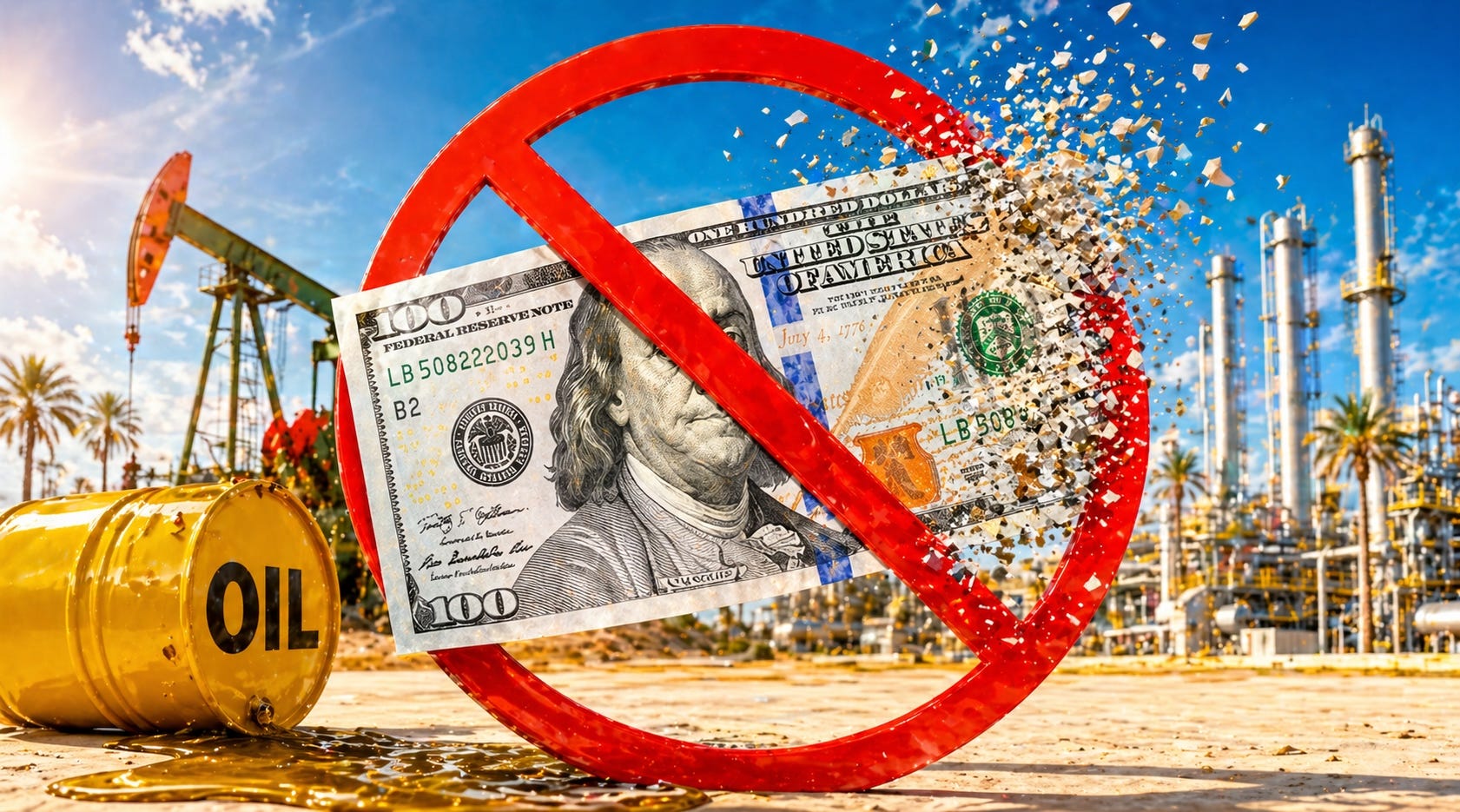
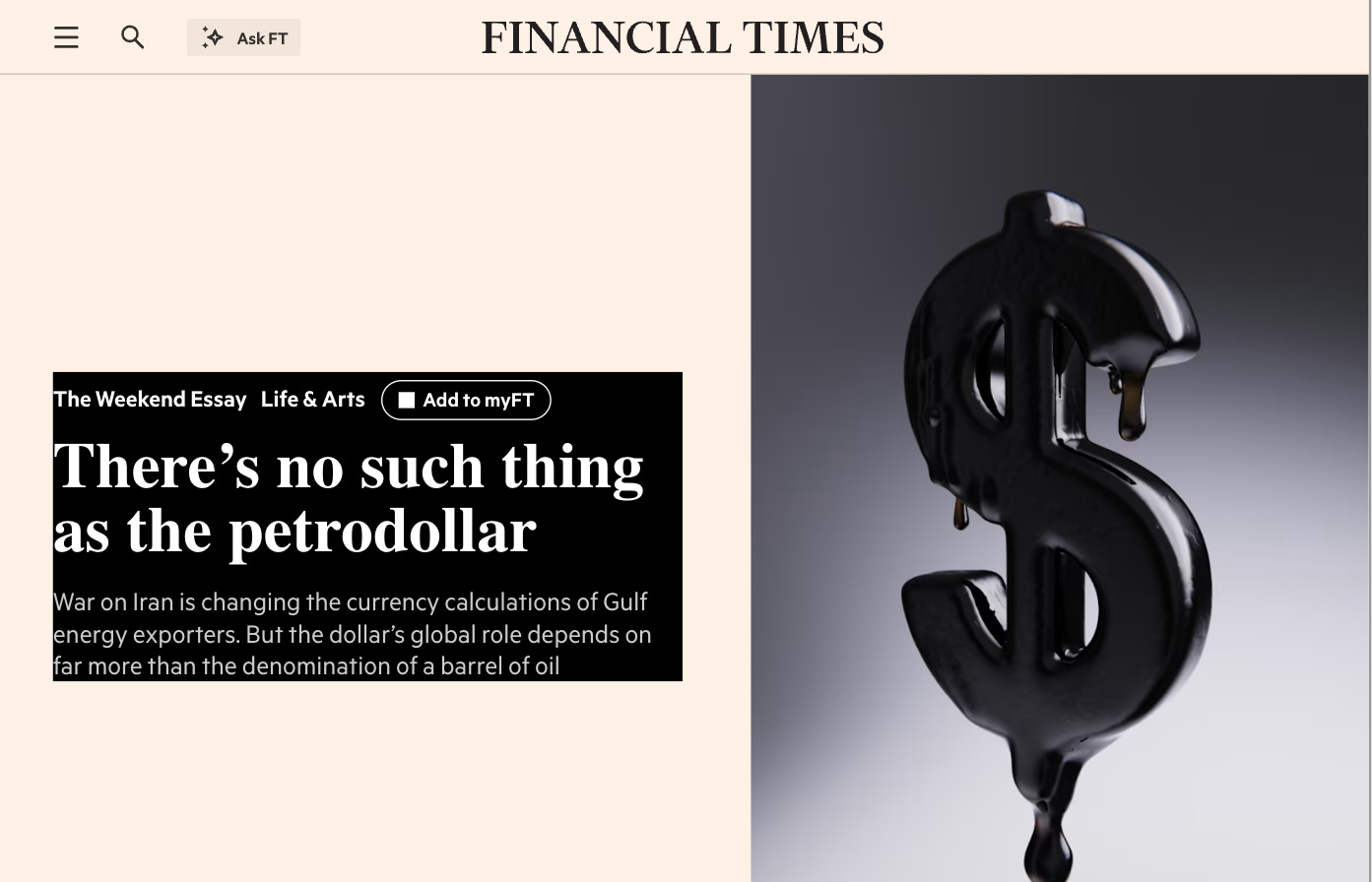
The Financial Times published a rare article. Rare because it finally admitted, in mainstream media, what we have been discussing for years: the petrodollar, as most people understand it, NEVER existed the way we were told.
The conflict in the Strait of Hormuz, the UAE leaving OPEC, and the narrative that oil producers are abandoning the dollar for the yuan. All of this feeds the idea that the petrodollar system is crumbling. But you cannot crumble something that was never the real foundation.
The deal everyone knows
The story is well known. In the early 1970s, American diplomats visited Saudi Arabia and struck a deal: the Saudis would price oil in dollars and invest their profits in US Treasury bonds. In return, Washington would guarantee military security and regional stability. The dollar would float on the US Navy.
This deal did exist, and it was probably the best diplomatic agreement in American history. It created the foundation for the financial hegemony we know today. But the narrative stopped there, and people came to believe that the dollar is powerful BECAUSE of this oil pact. And this is exactly where the story gets inverted.
The inversion of cause and effect
The Financial Times article puts it directly: oil producers priced barrels in dollars in the 1970s because a global banking infrastructure in dollars ALREADY EXISTED. It was not oil that created demand for the dollar. It was the banking network already operating in dollars that made it natural to price oil in that currency. The petrodollar narrative completely inverts the cause and effect relationship.
Two systems, one dollar
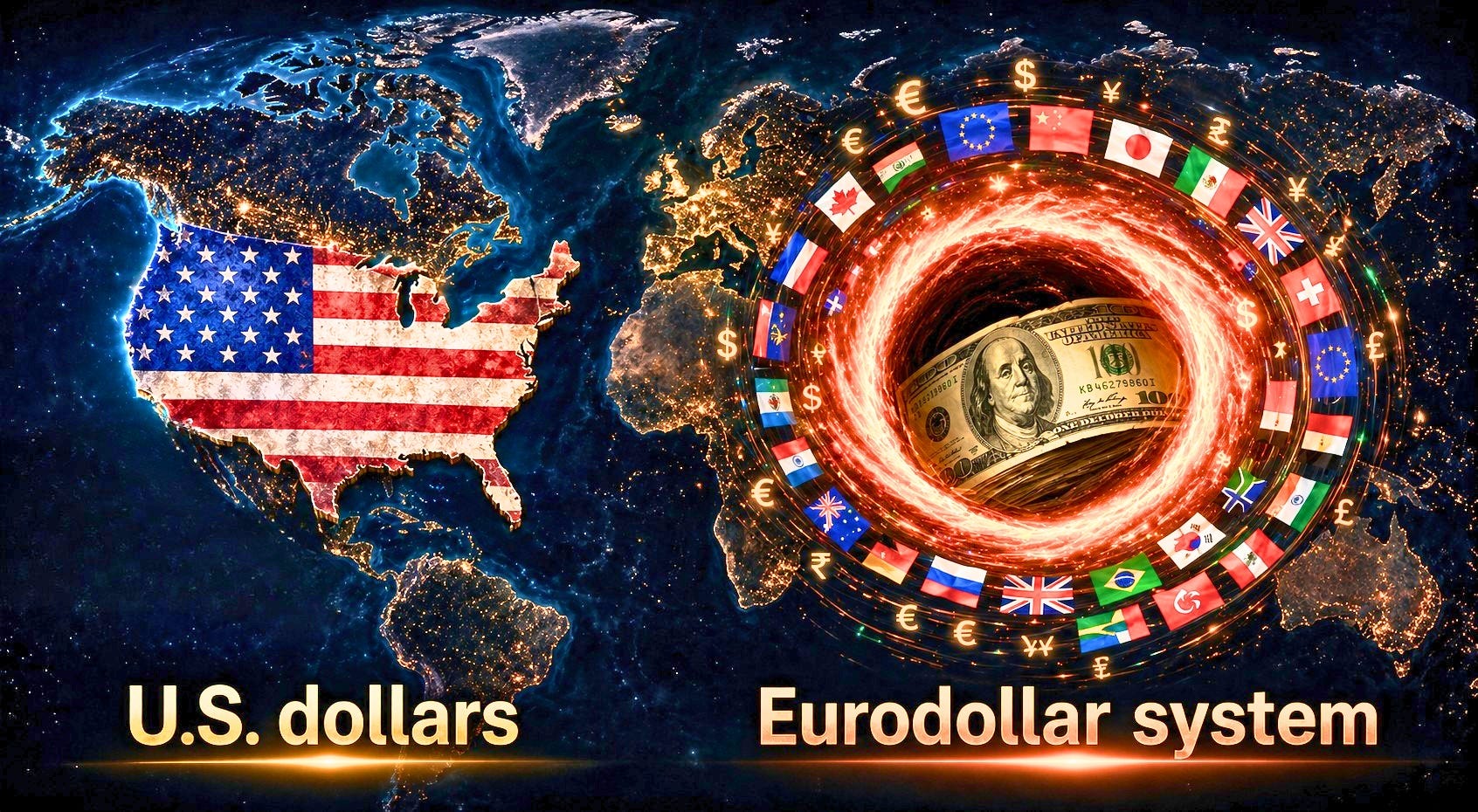
To understand why the petrodollar is a myth that oversimplifies reality, you need to see the dollar as two completely distinct systems. The first is the domestic American system, what we can call the Fed Dollar. It is the dollar inside the United States, visible to the Fed, regulated by the Treasury, subject to monetary and fiscal policy. When capital enters the US, it stays in this jurisdiction.
But the moment an American company wires money to a French company, that dollar disappears from the Fed's jurisdiction. It enters the eurodollar system, which has NOTHING to do with euros. It is the system of dollars that exist outside the United States, operated by private banks around the world, completely outside American regulatory reach. It is what we call ledger money, purely accounting-based currency. A network of debts between banks, transmitted through systems like Swift and Chips, functioning like a blockchain before blockchain existed.
The revolution was banking, not oil
Private banking technology, particularly in the late 1950s and 1960s, already allowed the transmission of dollars outside the United States without needing to move physical notes or gold. HSBC London lends to BNP Paribas in Paris, which lends to UBS in Switzerland. Each bank creates its own dollars on its own balance sheet, with the tacit acceptance of the Fed, but outside its reach. The bank balance sheets ARE the money itself, because dollars are debt, and these debts are fungible.
Nixon did not kill the system in 1971 when he closed the gold window. He was the last to turn off the lights at a party that had already ended in 1955. Nobody needed to transmit gold or physical notes anymore. All you needed was to transmit IOUs, the debt of one bank to another.
Why the dollar does not collapse
This distinction is FUNDAMENTAL to understanding why the dollar does not collapse even when the petrodollar narrative appears threatened. The amount of dollars circulating in the eurodollar system, outside the United States, is FAR greater than what circulates inside. And this system feeds itself in two ways: international trade and credit. Those who cannot generate dollars through exports need to borrow them. And when you take on a debt of 1 million dollars, the real debt is 1 million plus interest. This creates a structural demand for dollars that NO geopolitical agreement created and no geopolitical agreement can destroy.
Saudi Arabia in the 1970s was indeed a major pillar in the expansion of this system, using oil trade to fuel the eurodollar. But the revolution was already banking and credit-driven. Oil was fuel for an engine that was already running.
The eurodollar system is the invisible plumbing that connects the global financial world. At OmniMacro, we show how this mechanism affects your investments and how we position our own portfolio.
Source: https://www.ft.com/content/be345914-7b4b-4264-bcbd-6e5e33b798c7